 By
By Nearly two decades after Hurricane Katrina, the people of New Orleans continue to be a testament to hope, ingenuity and perseverance. Communities have done more than rebuild — they are reimagining systems to create opportunity for all, especially children. While significant progress has been made, critical work remains to ensure that growth is truly equitable and lasting. As part of an ongoing reflection series called Rooted In Us, W.K. Kellogg Foundation (WKKF) staff and local leaders will share their perspectives on community efforts, lessons learned and the investments still needed to build a future where all New Orleanians can thrive.
In this conversation, Alyson Curro, a communications officer for the Kellogg Foundation, sits down with Chuck Morse, executive director of Thrive New Orleans, to reflect on what it takes to build climate-ready careers, strengthen community infrastructure and reconnect families in the aftermath of disaster.
Curro: When you look back over the past 20 years, is there a story that really captures what Thrive is all about?
Morse: Absolutely. One story that stands out involves three generations of one family from the Desire Projects in the 9th Ward. We call it our “three-gen” story.
The grandfather had been incarcerated during Katrina — he was at Angola, completely cut off from his family. Even for people on the outside, it was hard to find loved ones back then. Cell service was down, people were scattered. But he managed to organize with the warden to let people use the phone for a few minutes to try and reconnect.
Fast forward to his release after nearly 30 years. He joined our program at Thrive and really flourished. Then he told his son—who’d also been in and out of jail—about it, and the son joined, too. Eventually, the grandson, who was just a small child during Katrina, entered the program as well. That was the first time he’d ever met his grandfather.
All three generations reconnected through Thrive. They didn’t just rebuild relationships—they built skills and found stable work. The grandson is now in his early 20s, working as a high school coach. He was able to step away from negative influences and choose a different path. That’s what this work is about.

Curro: That’s an incredible story. Thank you for sharing it. Looking at the work you’ve done — what’s a milestone you’re especially proud of?
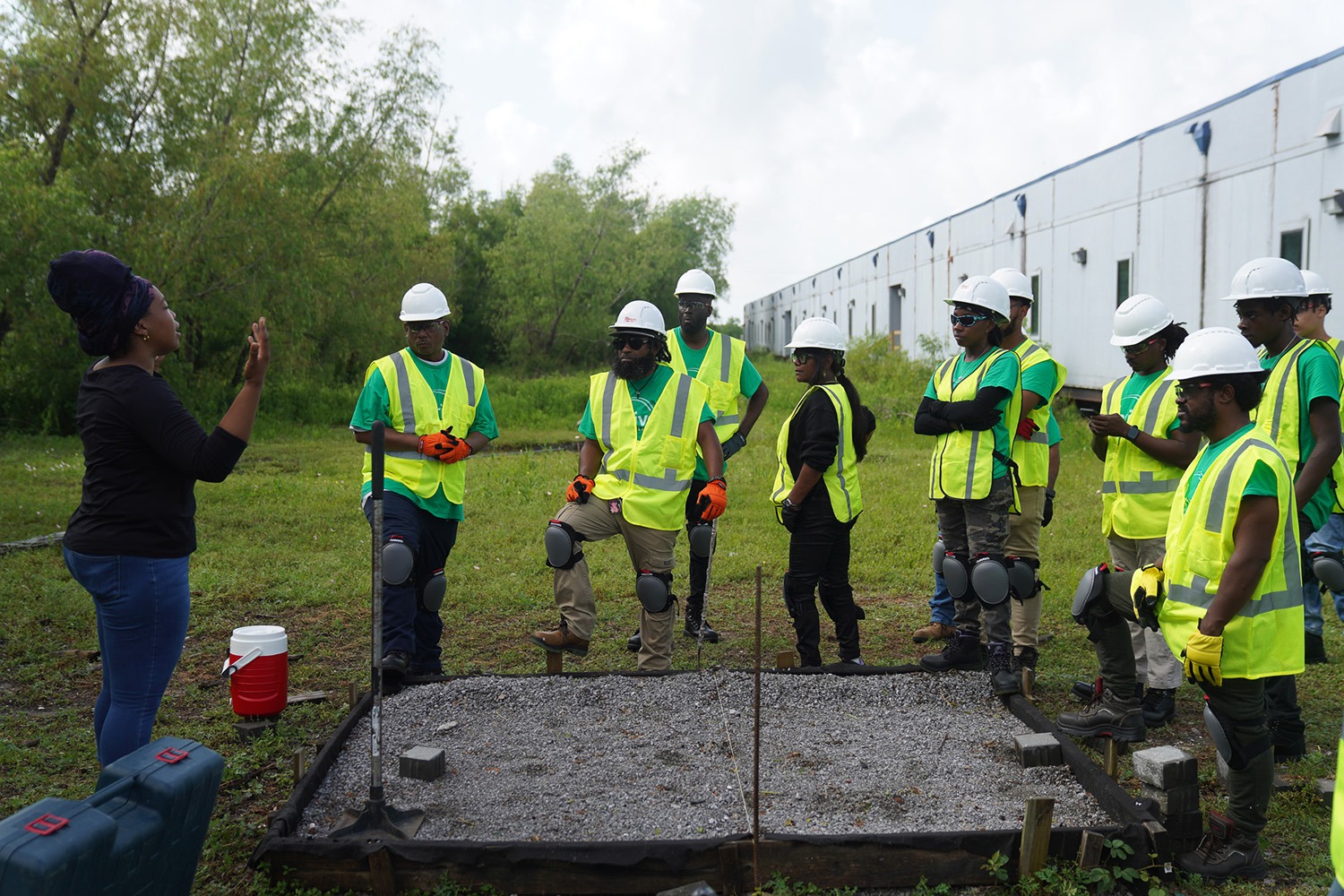
Morse: I’m proud that we’ve graduated over 250 participants through our green infrastructure workforce program and over 125 businesses through our entrepreneurship program. And the Kellogg Foundation was key to that growth.
We started small — five or six people crammed into a room, babies in swings, laptops on laps. But we got a breakthrough with that first Kellogg Foundation grant, and we evolved. At first, we were trying to be everything to everyone. Then we made a strategic pivot.
“We asked ourselves: What did Katrina teach us? That our environment is vulnerable—and that future jobs are in climate resilience.”
So we focused our programs around that. We wanted local residents not just to survive the next disaster but to be part of the solution. Too many contracts after Katrina went to people from outside the city. We wanted locals rebuilding their own communities.
Curro: Who helped make that shift possible?
Morse: Propeller has been a ride-or-die partner. We’ve built real trust — so much so that we even share funding. That’s rare in this nonprofit space. Baptist Community Ministries, Louisiana Economic Development and the Giving Hope Foundation have also been with us along the way. Their belief in us, especially in the early days, meant everything.
I also want to acknowledge JP Morgan Chase, which has been a major contributor to our workforce program, helping us scale and sustain our impact. And First 72+ has been an essential partner in creating a direct pipeline from reentry to opportunity — they connect people to us, and we help them move toward stable careers. These partnerships are what make the work possible.
Curro: What challenges still remain?
Morse: Affordable housing is number one. We’re losing the very people who make this city what it is — our culture bearers, our musicians, our teachers. If they can’t afford to live here, the spirit of New Orleans is at risk.
There’s also a confidence gap. Many folks who come through our doors have been through so much trauma. Katrina separated families. Our churches—anchors in the community — were devastated. Memberships scattered across the country. So we spend a lot of time building people up, helping them believe they’re worthy of a career path, of stability. That takes time.
Curro: As we look ahead, what’s one lesson from Thrive’s journey that you hope others carry forward?
Morse: We have to stop checking boxes. Real change takes time. We started with an eight-week program — now it’s 18 months. You can’t transform lives overnight.
It reminds me of something Michelangelo said when asked how he sculpted David. He said, “David was already in the block — I just had to chip away at it.” That’s what we do. The greatness is already in our people. We just need to chip away at what’s covering it.
Want to learn more about Thrive New Orleans and the work they’re doing to build climate-ready careers and strong communities? Visit thrivenola.org to explore their programs, impact and ways to get involved.
Comments